Outdoor living remains a priority for homeowners, and for good reason. Whether you’re hosting a summer barbecue, finding a quiet spot to unwind, or just extending the usable square footage of your home, the right backyard setup can really change how you use your space.
If you’ve been thinking about upgrading your yard, you’ve probably spent a lot of time narrowing down the possibilities. What would fit my space the best? As with many homeowners, that decision may come down to: Deck or patio?
Both are popular, both add outdoor living space, and both come with their own trade-offs. The good news is that there’s no wrong answer! You just need to figure out which one works better for your yard, your lifestyle, and your budget.
Here’s what you need to know as you make that call.
What’s the Difference Between Deck vs. Patio?
At the most basic level, it comes down to structure and placement.
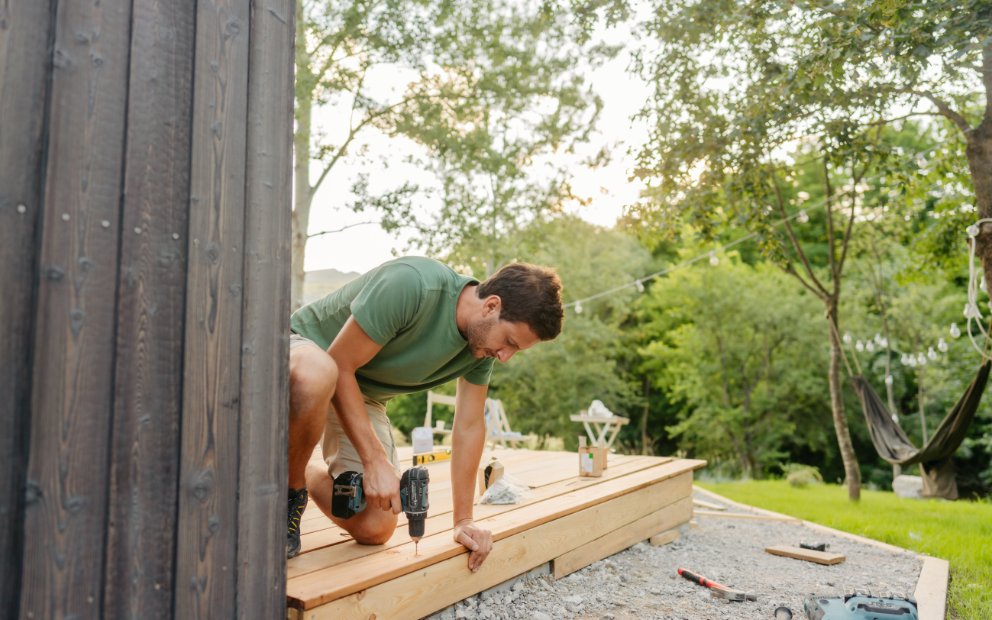
A deck is an elevated, above-ground platform, typically made from wood or composite materials, attached to the house. Decks are built up from the ground, which makes them especially practical when your yard isn’t flat or when you want to step directly out from a back door onto an elevated surface.
A patio is a ground-level surface, most often made from concrete, pavers, brick, or natural stone. Because it sits directly on the ground, a patio tends to be more straightforward to install and is a natural fit for yards that are already fairly level.
Both serve the same basic purpose of creating a dedicated outdoor space, but they get there differently, and those differences matter when it comes to cost, upkeep, and how well each option fits your specific yard.
Cost: What to Expect
Budget is usually one of the first things people want to know about, and the honest answer is that it depends on materials, size, and labor in your area.
Patios tend to be the more budget-friendly starting point. According to Angi®, the average patio installation runs around $4,005, with most homeowners landing somewhere between $2,028 and $6,090. On a per-square-foot basis, that translates to roughly $5 to $50 depending on material, like basic concrete on the low end, premium stone or custom pavers on the high end.
Decks typically run higher. NerdWallet® puts the national average at $8,246, with a typical range of $4,341 to $12,586, and that can climb significantly for larger builds or premium materials. On a per-square-foot basis, most professionally built decks fall between $30 and $60. Composite decking sits at the higher end of that range upfront, but tends to cost less to maintain over time compared to wood.
That said, sticker price isn’t the whole story. Maintenance costs over time factor in too, and that’s where patios often have an edge.
Maintenance: The Long View
A wood deck requires regular upkeep, including staining, sealing, and periodic board replacement, to stay in good shape. Composite decking dramatically reduces that maintenance burden but still needs occasional cleaning. Either way, if you go the deck route, build maintenance into your long-term budget.
Patios, particularly those made from concrete or pavers, are relatively low-maintenance. Occasional cleaning and the odd repair to a shifted or cracked paver are about all most homeowners deal with. Pavers have the added advantage of being easy to replace piece by piece if something breaks, without having to redo the whole surface.
What Works for Your Yard
This is really where the decision is made.
If your yard has a significant slope, a deck is usually the more practical choice. Building a deck allows you to create a level, usable surface above uneven terrain, something a patio can’t easily do without extensive and expensive grading. Decks also make sense when your back door is elevated from the yard, since they can be built to meet the door’s threshold directly.
If your yard is relatively flat and you have good drainage, a patio is a solid option. Patios sit close to the ground, which tends to make them feel more connected to the yard itself. That can be a better fit if you want a space that flows naturally into a garden or lawn area.
Climate also plays a role. Wood decks in wet climates require more frequent maintenance to prevent warping or rot. Stone and concrete patios can crack in regions with hard freezes, though pavers handle freeze-thaw cycles better than poured concrete.
How to Finance a Deck or Patio
If you don’t have cash saved for the project, there are a few common ways homeowners finance outdoor renovations like a deck or patio. You may want to see if you qualify for options like:
- Personal Loans: These can be used toward home improvement projects like a deck or patio. Because it’s a personal loan, your home isn’t used as collateral.
- HELOC (Home Equity Line of Credit): A HELOC lets you borrow against the equity in your home, drawing funds as needed up to a set limit. It may be an option for projects where costs come in stages or your final budget isn’t set in stone yet.
- HELOAN (Home Equity Loan): A home equity loan provides a lump sum upfront, also using your home as collateral. It may be worth considering if you have a firm project budget, prefer predictable monthly payments, and are able to accommodate another loan payment.
Before choosing any of those options, be sure to carefully review your finances. Then, speak with a trusted lender about what makes sense for your situation.
The Fun Part: Thinking About How You’ll Actually Use It
Beyond logistics, it’s worth spending a few minutes thinking about how you actually want to use the space.
Decks tend to work well for defined seating areas. Think an outdoor dining set, a grill station, and a few chairs. Their elevated position can also give you a better view of the yard, especially if you have kids or pets you want to keep an eye on.
Patios can feel more open-ended. A larger patio might host a dining area on one side, a lounge setup on the other, and leave room for a fire pit or planters in between. They’re often easier to expand in sections if you want to grow the space over time.
What to Keep in Mind
- Decks work better for sloped yards or when your door is elevated.
- Patios tend to work better on flat terrain; they’re generally easier and less expensive to install.
- Patios tend to be lower maintenance over time, especially when built with pavers or natural stone.
- Both options may potentially add value and enjoyment to your home. The right choice depends on your yard, your climate, and how you plan to use the space.
- Upfront cost matters, but factor in long-term maintenance too when comparing options.
Final Thoughts
Choosing between a deck vs. patio can set the tone for your home this summer. It’s ultimately a matter of matching the right option to your yard’s layout, your maintenance preferences, and how you want to spend time outside.
Take a walk around your backyard. Look at the grade of the land, where your back door sits, and how you’d naturally picture the space being used. Those observations will probably point you in a clear direction.
This information is intended for educational purposes only. Products and interest rates subject to change without notice. Loan products are subject to credit approval and include terms and conditions, fees and other costs. Terms and conditions may apply. Property insurance is required on all loans secured by property. VA loan products are subject to VA eligibility requirements. Adjustable Rate Mortgage (ARM) interest rates and monthly payment are subject to adjustment. Upon submission of a full application, a mortgage banker will review and provide you with the terms, conditions, disclosures, and additional details on the interest rates that apply to your individual situation.