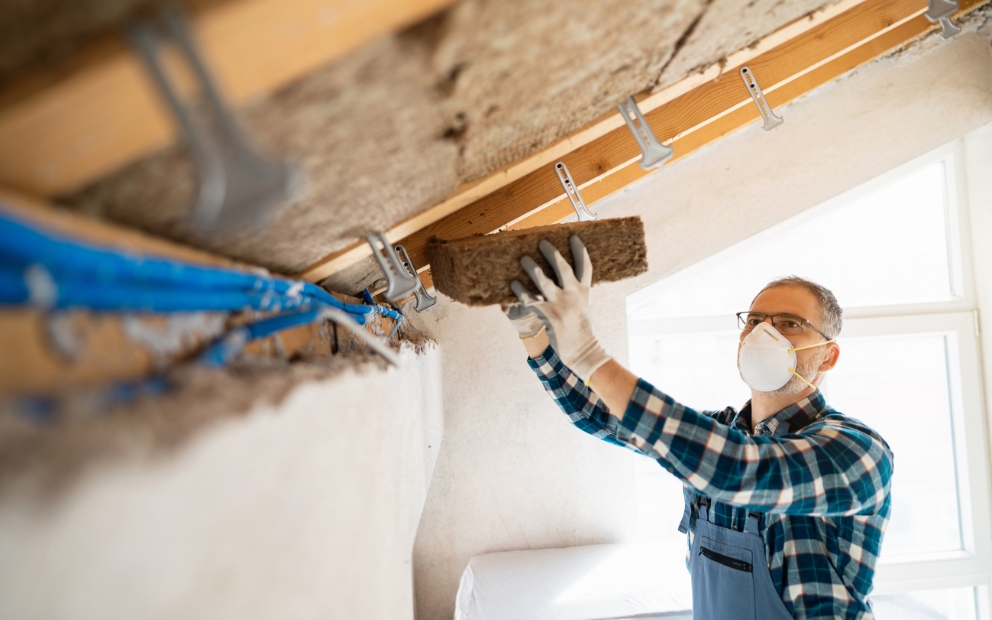
An unfinished attic, a bare basement, and a garage that mostly holds bikes and holiday bins could potentially each become the bedroom, home office, or guest suite you’ve been wanting.
But each space comes with its own questions. Things like ceiling height, moisture, insulation, and local rules can shape a project as much as the budget does, and costs vary widely.
This article covers what to check before you start, what these conversions might cost, and how a home equity loan for home renovations or a home equity line of credit (HELOC) can help fund the work.
Usable Space and Legal Living Area Are Not Always the Same
Finishing a room does not automatically make it legal living area. Local building codes set the rules, requirements vary by jurisdiction and property, and a building permit is typically needed to turn an attic, basement, or garage into living space.
Appraisal standards add another layer. Appraisers might only count finished, above-grade space as living area, so a basement is often reported separately no matter how nicely it is finished.
A finished attic or garage conversion might count when it connects to the inside of the home, has a permanent heat source, and matches the construction quality of the rest of the house.
In other words, a conversion can add comfort and function without changing a home’s official square footage. No renovation comes with a promised return, so it’s smart to plan around how you want to use the space and whether the change will be a positive even if it doesn’t yield a financial benefit. A call to your local building department is a good first step.
Converting an Attic: What to Know About Costs and Requirements
Start with these checks for your attic:
- Ceiling height and floor area: Model building codes generally call for at least 70 square feet of habitable floor space and a 7-foot ceiling. In rooms with sloped ceilings, at least half the floor area needs 7 feet of headroom, and space under 5 feet does not count toward the minimum.
- Structural support: Ceiling joists under an attic are often built for lighter loads than a floor must carry, so reinforcement may be needed. A structural engineer typically costs $400 to $800, according to data from Angi®.
- Stairs and escape: A habitable attic needs an emergency escape opening, and its stairs generally must meet the same code rules as stairs elsewhere in the home. If the attic is reachable only by a hatch, a new staircase may need a line in your budget.
- Insulation and climate control: Most attics sit outside the home’s thermal envelope, so insulation often has to move to the roof line. The existing heating and cooling system may also lack the capacity to serve a new room.
National cost estimates from Angi® put the average attic finishing project near $20,000, with most between $7,500 and $35,000. A bedroom conversion ranges from $9,000 to $65,000, and a full conversion into living space can reach $200 per square foot.
Finishing a Basement: Costs and Key Considerations
Basement conversions start with two questions: is the space dry, and is it tall enough to live in?
- Moisture management: Waterproofing averages about $4,400, or $5 to $10 per square foot, and a sump pump can add roughly $575.
- Ceiling height: Check with your local regulations around habitable basement space. If you find you need to add headroom, this can be very costly because it often requires raising the foundation.
- Emergency escape: Basements and every sleeping room need an emergency escape and rescue opening. Egress windows cost about $200 to $950 each, plus more if excavation is needed.
- Light and ventilation: Habitable rooms also need adequate natural light and ventilation, or approved alternatives.
The national average to finish a basement is about $32,000, according to Angi®, with most projects between $15,000 and $75,000. A half-finished basement runs $7 to $23 per square foot.
Converting a Garage Into Living Space: Costs and Requirements
A garage already has walls, a roof, and a slab. What it usually lacks are living-space comforts and local approvals.
- Zoning and parking: A building permit is typically required, and some local codes require you to replace the parking space you remove. Check any homeowners association rules that apply to your property, too.
- Insulation and climate control: A converted garage needs insulation plus heating and cooling. A ductless mini-split system runs $1,500 to $4,000, while extending central heating and cooling could cost around $3,000 to $5,000. Of course, these numbers may vary based on your area and complexity of your project.
- Flooring, doors and windows: Flooring could cost between $1,000 to $4,000. Swapping the garage door for an entry door may cost around $200 to $1,000, and new windows might add $500 to $2,000.
- Escape and parking plans: A garage bedroom may need an emergency escape window. A converted garage also no longer stores a vehicle, so plan for parking elsewhere.
The national average to convert a garage is about $16,495, according to Angi®, with most projects between roughly $6,000 and $27,500.
HELOC for Home Improvements or a Home Equity Loan: How Each Can Cover the Work
Once you know the scope, you can look at financing. Both a home equity loan for home renovations and a HELOC let you borrow against the equity in your home, which means your home serves as collateral. If the balance is not repaid as agreed, the lender can foreclose.
- Home equity loan: Typically provides a lump sum up front, often at a fixed rate, repaid with regular payments over a set term.
- HELOC: A revolving line of credit. During the draw period, you borrow as needed up to a limit, and the rate is typically variable.
A home equity loan may fit a project with a set scope and price. A HELOC may fit work done in phases. Either way, the amount you can borrow depends on your equity, income, credit history, your home’s market value and lender limits, so it makes sense to gather itemized quotes and leave room in the budget for surprises.
Ready to compare? Explore home equity loan and HELOC options or read how a HELOC can fund your next home project.
Explore Home Equity Loan and HELOC Options
Key Takeaways for Converting an Attic, Basement, or Garage
- Finished space is not always legal living area, and a conversion does not automatically change a home’s appraised square footage.
- Each space has its own checklist to consider.
- National averages run about $16,500 for garage conversions, $20,000 for attics and $32,000 for basements, though your scope ultimately drives the total.
- A home equity loan or HELOC uses your home as collateral, so match the financing to the project.
- Your local building department has the final word on codes, permits, and parking.
Final Thoughts: Planning a Home Equity Loan for Home Renovations
Turning an attic, basement, or garage into living space takes planning, and the early questions drive a lot of what happens. What do local codes require? What could the work cost? How might you fund it?
A mortgage banker at The Federal Savings Bank can talk through how a home equity loan or HELOC may fit your project and answer your questions about equity and eligibility.
This information is intended for educational purposes only. Products and interest rates subject to change without notice. Loan products are subject to credit approval and include terms and conditions, fees and other costs. Terms and conditions may apply. Property insurance is required on all loans secured by property. VA loan products are subject to VA eligibility requirements. Adjustable Rate Mortgage (ARM) interest rates and monthly payment are subject to adjustment. Upon submission of a full application, a mortgage banker will review and provide you with the terms, conditions, disclosures, and additional details on the interest rates that apply to your individual situation.


